
Trekking or expeditions to the snow-covered high Himalayas are adventurous. It is a multi-day vigorous journey passing diverse natural scenic environments offering profound physical and mental health adding remedy for the soul. Trekking transforms the well-being of fitness, enhances stamina, reduces stress, strengthens the immune system, and promotes mindfulness through immersion in nature adding to build mental resilience and strengthens social bonds.
Many trekkers from around the globe experience Nepal as their second home, after experiencing trekking adventures.
Trekking is a multi-day walking journey through high-altitude landscapes experiencing local culture, villages, and stunning, panoramic views. Nepal is a world-renowned trekking destination offering iconic routes like Everest Base Camp (EBC) and the Annapurna Base Camp (ABC) Circuit, Langtang, Manaslu Circuit, Makalu, Dolpo, Mustang and even the remote Kanchenjunga Base Camp ranging from tea-house to high-altitude fascinating snow-capped Himalayas of over 8,000 meters along with greenfield landscapes, diversity of cultural variety. Nepal also offers the most challenging adventure- the Great Himalayan Trails from Humla and Darchula in the west to Kanchenjunga in the east.
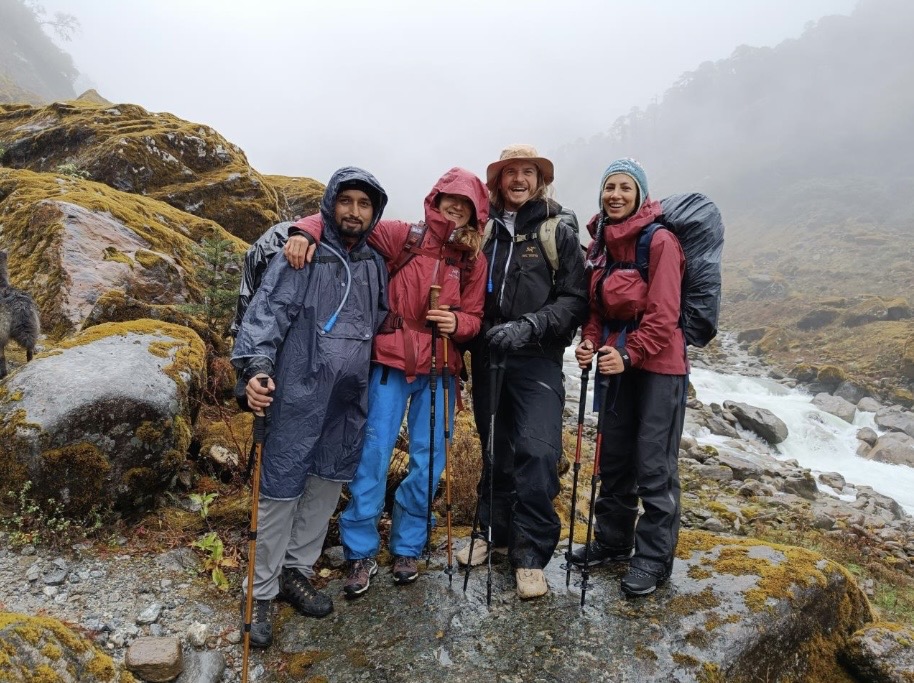
The diversity of trekking trails like in Nepal cannot be found in any other part of the world; thus, Nepal is truly known as a trekker’s paradise. So, every year, millions of people from all over the world come to Nepal for trekking and expeditions during the March to May and September to November taking into mind that trekking rejuvenates the spirit, creating unforgettable memories to reset, recharge, and reconnect with nature.
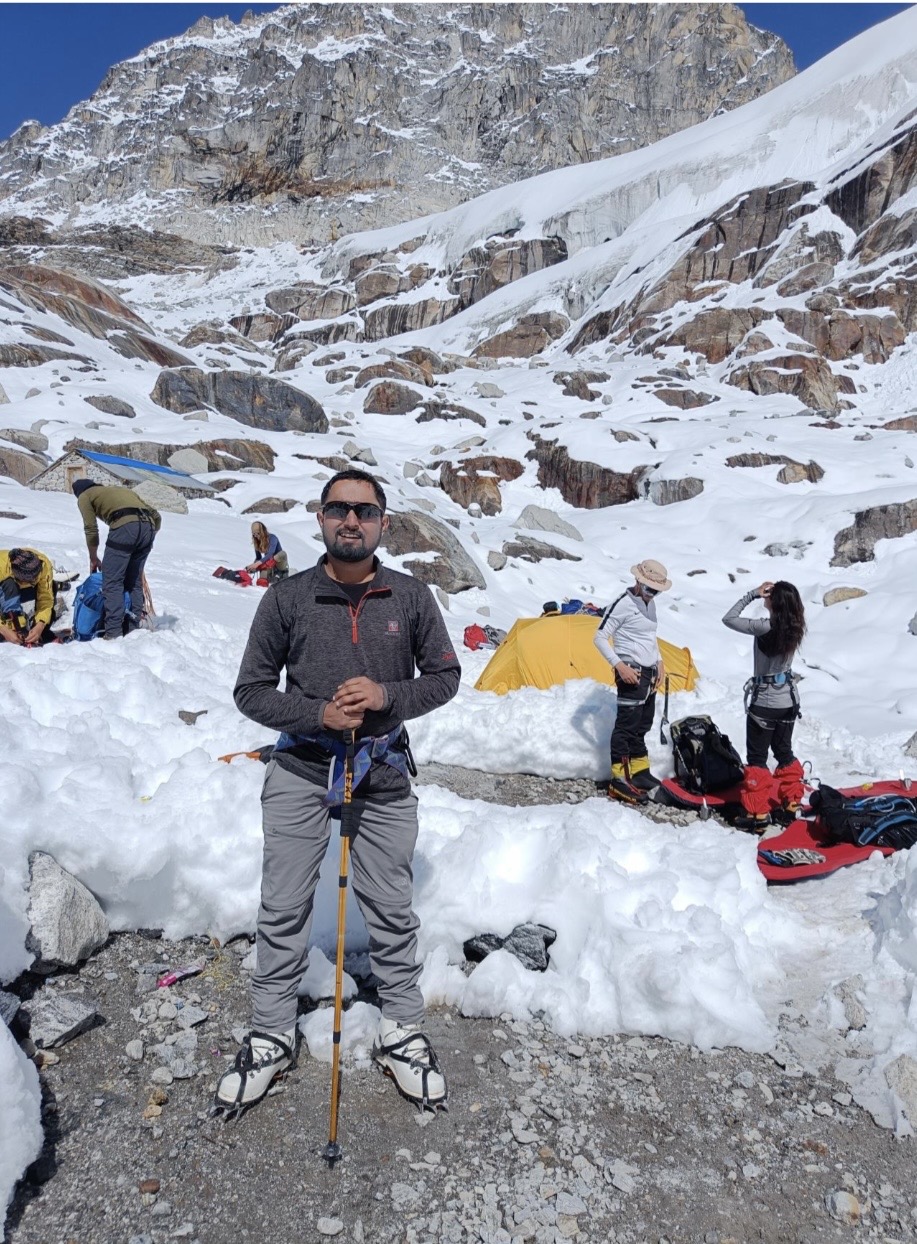
To experience the snow-covered trekking routes, this scribe along with a few other friends were on a trekking mission to top the 6,476 meter high famous Mera Peak- Nepal’s highest trekking peak that was topped for the first time by Col. J.O.M. Roberts and Sen Tenzing in 1953- offers breathtaking panoramic views of Mt. Everest (8,848.86 meters), Mt. Kanchenjunga (8,586 metre), Mt. Lhotse (8,516 metres), Mt. Makalu (8,485 metre) and Mt. Cho Oyu (8,188 metre).
Our challenging journey began with a thrilling flight to world’s most dangerous Tenzing–Hillary Airport located in Lukla- the door to the above five thousand meters trekking routes and adventurous expeditions.
The half-hour journey up to Lukla offered breathtaking views of Nepal’s eastern Himalayan ranges where trekkers from various countries buzzed with excitement.

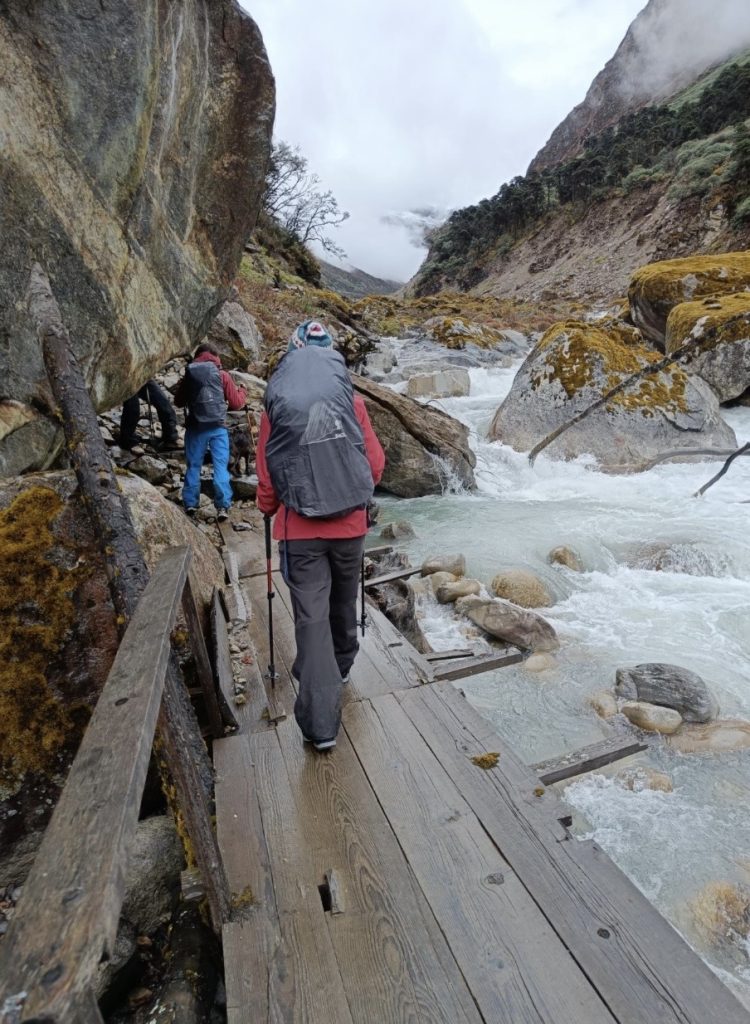
From there, we walked through the route experiencing forests, streams, and rugged trails and ended the day at Chhuthang by evening. The rain-soaked night made the tired day into a peaceful sleep.
Next morning from Chhuthang, we ascended Zatrawala Pass crossing the Kalo Himal ridge, up to Thuli Kharka.
On the third day even though it was raining, we headed to our mission to Kothe. Rain turned the trail slippery with mud and water but finally our team was welcomed to rest at Mera View Lodge with delicious food and a blissful night.
With luck, the next day was a clear sunny day. Seeing marvelous views we moved to the higher level challenging dangerous steps up to Lungsungba Gompa, a 200-year-old shrine where every trekker prays for a safe ascent. By evening, Thangnak greeted us under a full moon, its silver glow illuminating peaks like Kusum Kanguru and Charpate Himal.
The 5th day atop was steep and demanding. Passing a glacier, Charpati Lake, we descended to Dig Kharka, which was rewarded with stunning views of Mera Peak. Snow from earlier rains blanketed the trail. At Khare, Refuge Mera Lodge offered comfort. The northern face of Mera Peak towered above us is magnificent yet daunting.
Day 6 was a crucial day of rest and learning trekking methodologies. Our guide, Mr. Pemba, led us across snowfields and crevasse-laced terrain to 5,260 meters.
Day 7 was the toughest day. Relentlessly climbing seven hours crossing Mera La onward to high camp at 5,800 meters sweeping vistas of Mt. Everest, Mt. Makalu, Mt. Cho Oyu, Mt. Lhotse, Mt. Nuptse, Mt. Chamlang and Mt. Baruntse. The night was brutally cold, altitude gnawing at our strength.
On the eighth day nearly after mid-night passed, we headed into our trail having headlamps piercing the darkness. The climb was grueling, air thinning with every step. However, just 426 meters down to the 6,476 meters high Mera Peak situated at Hinku Valley of Solukhumbu district in northeastern Nepal, I encountered an unexpected catastrophe. The unzip of my jacket’s breathable pocket exposed me to a severe chest cold that forced me to descend at 6,050 meters. As other members of the trek team atop the 6,476-meter-high Mera Peak, I experienced sadness but learnt an indelible lesson that in the mountains even the smallest mistake can lead to big consequences.
However, I felt lucky enough seeing two Nepali passed away due to being unable to adjust themselves with the challenging weather and dangerous situation at the snow covered fields.
Also, learnt that all the trekkers must need to know at least basic practical skills about using crampons, a harness, clipping in and out of a rope and being able to use a walking axe to self arrest.
On the 9th day of our mission, retracing our steps, we descended to Kothe. Spirits lifted as we celebrated with our guides and porters, sharing laughter and stories of triumph and struggle. And finally, a chartered helicopter whisked us back to Lukla, followed by a flight to Kathmandu.
After landing at Tribhuvan International Airport, we headed to Boudhanath, where we celebrated a farewell get together, memorizing a challenging but enthralling superb odyssey trip which was not only the walking in the mountain trails to reshape perspective, fosters growth and collecting nature to culture memories but also a multi-dimensional holistic experience making the mind rejuvenated with nature enriched by blending physical challenge and cultural immersion.
(All the images are credit to writer)