
As the world ushers in the Year of the Snake on the Chinese lunar calendar, the Spring Festival has expanded beyond its traditional roots to become a global phenomenon, offering a window through which people around the world can learn about China’s cultural ethos and contemporary dynamism.
To mark the Chinese New Year, various cities of the world observe with dazzling lights and festive mood.
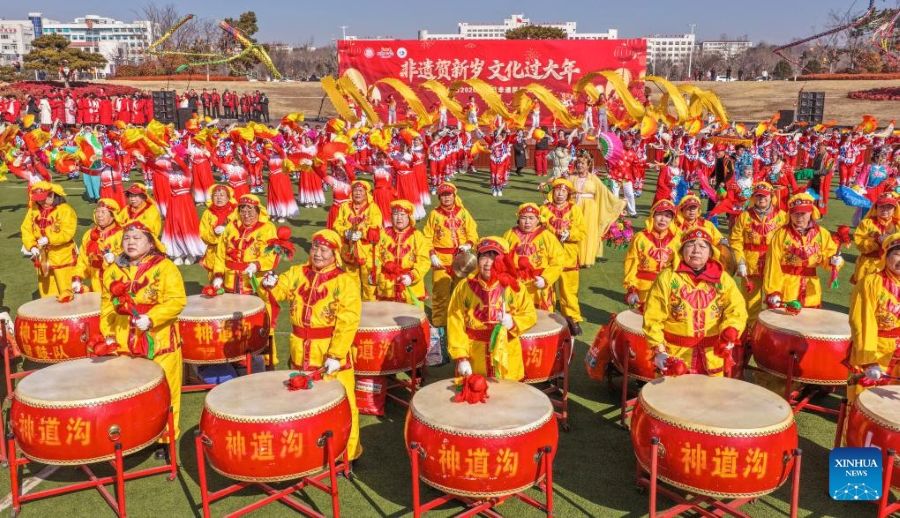
Global iconic landmarks joined China in celebrating a millennia-old tradition. Additionally, the festival’s global imprint extends beyond the lights: dragon dances, temple fairs and other activities were held across the world.
This year’s Spring Festival is the first since its inscription on the UNESCO intangible cultural heritage list. On UNESCO’s website, it states: “In China, the spring festival marks the beginning of the new year. It falls on the first day of the first month of the Chinese calendar and involves a variety of social practices to usher in the new year, pray for good fortune, celebrate family reunions and promote community harmony. This process of celebration is known as ‘guonian’ (crossing the year).”
The Chinese New Year is becoming a festival celebrated across the world. As nearly 20 nations recognize the Spring Festival as an official holiday and some 200 countries hold celebrations, this cultural event reflects humanity’s shared yearning for renewal and connection.
China’s expanded visa-free travel policies have amplified this cultural exchange, enabling more international travelers to visit China and immerse themselves in the festival’s rich customs.
Foreign visitors have experienced not just festive fireworks, but the profound values embedded in the tradition: familial bonds that transcend borders, the harmony between humanity and nature, and an emphasis on social cohesion. These values resonate across cultures, dismantle stereotypes and nurture mutual cultural appreciation.
“The Spring Festival Gala,” an annual TV program broadcast live and watched by billions worldwide, epitomizes China’s cultural appeal. The 2025 gala featured the performances of U.S. band OneRepublic and Peruvian artists, demonstrating artistic dialogue between East and West.
The televised extravaganza also offers a glimpse of the integration of tradition and modernity as well as technological progress in the country. AI-powered robots performed a synchronized dance in embroidered jackets during the show, showcasing China’s fusion of heritage and cutting-edge technology, and the openness, inclusiveness and innovation of Chinese culture.
Beyond culture, this year’s Spring Festival illuminated China’s economic resilience amid global economic headwinds.
The nine-day (February 15 to February 23) holiday saw year-on-year increases in tourist numbers and expenditure, as well as record box office revenue. Boosted by trade-in programs and other policies, the sales of home appliances and communication equipment at key retailers jumped during the festival, reflecting the vibrancy of China’s consumption market.
In Chinese culture, the snake symbolizes agility, wisdom and vitality. As the world is fraught with growing uncertainties and regional frictions, the Spring Festival, an age-old tradition that perpetually rejuvenates itself, serves as a unique portal to a dynamically evolving China.
Moreover, the values enshrined within the Spring Festival not only act as a guiding light for individuals, but also hold the potential to foster deeper mutual understanding among different cultures and promote world peace and prosperity.
The traditional celebrations for the Chinese New Year (pronounced “Chunjie”) or Spring Festival gradually gaining global recognition and popularity, opinions vary on whether the festival should be called “Spring Festival” or “Chinese New Year,” with some also advocating for the term “Lunar New Year.”
The term “Spring Festival” is a literal translation of the Chinese word “Chunjie.” The character “Chun” means “spring,” symbolizing renewal and new beginnings, while “Jie” means “festival.”
Therefore, using “Spring Festival” in various contexts is appropriate, as it accurately reflects the festival’s cultural significance and aligns with its official recognition. For example, an annual TV program broadcast live and watched by billions worldwide on Chinese New Year’s Eve is titled “The Spring Festival Gala.
Meanwhile, the celebrations are deeply rooted in Chinese traditions, such as the reunion dinner, probably the most important meal of the year, where the whole family gathers, as well as the giving of “hongbao” (red envelopes) and the lighting of firecrackers, all of which symbolize good fortune, happiness and prosperity.
“Chinese New Year” resonates more strongly with the festival’s cultural and historical significance, making it a more meaningful choice for many.
Shi Wei, a council member of the Shanghai Astronomical Society, said that from the calendrical perspective, the term “Lunar New Year” is scientifically inaccurate. The Chinese calendar is not the same as the lunar calendar, and therefore “Chinese New Year” should not be equated with “Lunar New Year.”
“Lunar New Year” can broadly refer to the traditional New Year celebrations observed in various Asian cultures, such as Korea’s “Seollal,” Vietnam’s “Tet” and Mongolia’s “Tsagaan Sar.”
The debate over whether to call the festival “Spring Festival,” “Chinese New Year” or “Lunar New Year” may persist, but one thing is certain: the Spring Festival is becoming a festival celebrated worldwide.
Up to now, nearly 20 countries have designated the Spring Festival as an official holiday. The “Happy Chinese New Year” celebrations worldwide, organized by the Chinese Ministry of Culture and Tourism, have been held annually for 25 consecutive years. This year, the event featured nearly 500 diverse performances and exhibitions across more than 100 countries and regions. The next Spring Festival will fall on Feb. 17, 2026.
(With kind courtesy of Xinhua Commentary based)
Meanwhile, Thailand is working to bring Chinese tourists back to the country during the Lunar New Year holiday after last year’s downturn, competing with Vietnam to capitalize on tensions between China and Japan that have spurred many to seek alternative destinations.
according to booking platform Tongcheng Travel, Bangkok was the second-most popular destination outside mainland China for Chinese travelers, behind Seoul,
On February 9 the Thai government announced the “China and Thailand are One Family” tourism promotion campaign, partnering with international airports in Thailand and major Chinese travel agencies to offer packages with discounts on airfare and hotels. It will also hold celebratory events in Bangkok and elsewhere. China was the top source of visitors to Thailand.