
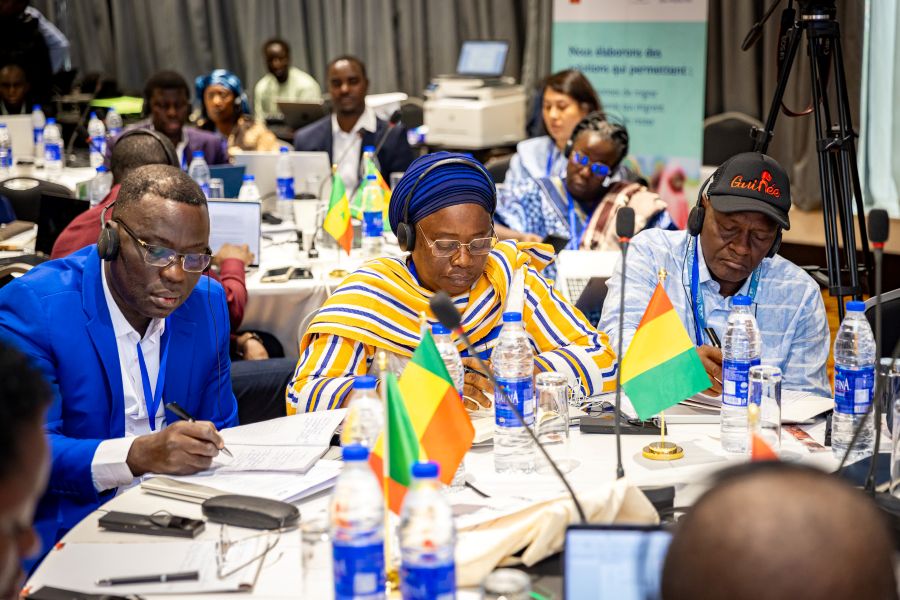
Leaders across West and Central Africa are calling for more funding to help communities deal with climate change as floods, droughts and environmental degradation force more people to leave their homes, reshaping migration patterns and displacement across the region.
The Lagos Conference held on 12–13 May, 2026, co-hosted by the Government of Nigeria with support from the Ministry of Foreign Affairs of Denmark through the Climate Change and Migration Data (CCMD) Programme, developed a roadmap outlining practical ways to protect livelihoods and help communities adapt to climate impacts, said IOM.
The conference held in the Nigerian capital also highlighted growing action across the region. Most countries that recently updated their national climate plans now include migration and displacement issues.
Côte d’Ivoire and Mauritania also joined the Kampala Ministerial Declaration on Migration, Environment and Climate Change, bringing the number of supporting African countries to 33.
“Climate change is already affecting where and how people live. The challenge now is moving fast enough to deliver practical solutions and funding to vulnerable communities,” said Sylvia Ekra, IOM Regional Director for West and Central Africa.
Climate shocks are already altering where and how people live across West and Central Africa. Floods, droughts and storms are damaging homes, roads and essential services across the region. By the end of 2024, about 2 million people in West and Central Africa had been displaced by disasters – around one fifth of the global total, the IOM added.
Environmental damage, desertification, and rising sea levels are also increasing pressure on communities and cities. The World Bank estimates that by 2050, up to 32 million people in the region could be forced to move within their own countries because of climate change.
Participants called for stronger early warning systems, more support for local adaptation efforts and better access to climate funding for affected communities, as part of a series of recommendations ahead of major global climate negotiations, including the United Nations Framework Convention on Climate Change (UNFCCC) and COP31, which will take place in Türkiye later this year.