

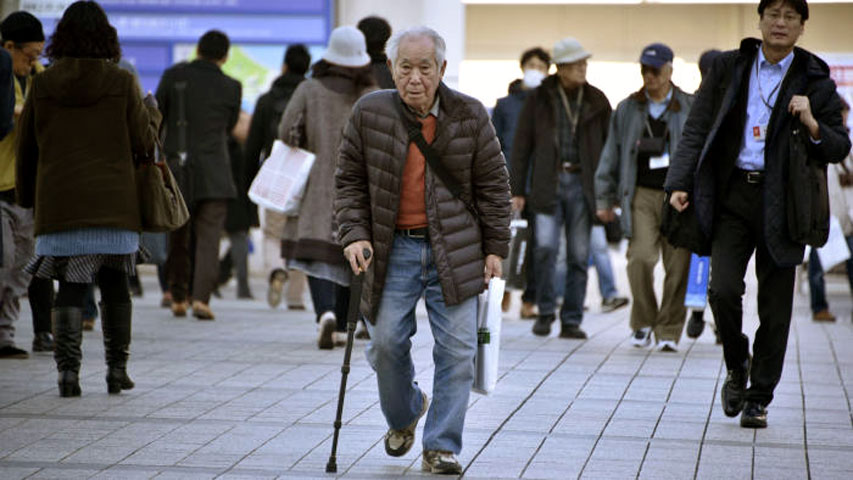
2019 marks the end of the Heisei era in Japan, which spanned 30 years. During the period, Japan became one of the world’s most rapidly aging societies. Its population also began to shrink in 2010. The number of babies born in the country last year was almost 30 percent less than in 1989. The decline is expected to worsen in the future.
Japan’s population has continued to shrink steadily because of falling birth rates. It peaked at 128 million in 2011, now stands at 126 million, and is expected to fall below 100 million by 2053, according to government projections. In 2020, Japan’s population contracted by 512,000 people, NHK World Japan reports.
More than 20 per cent of Japan’s population is over 65 years old, the highest proportion in the world. By 2030, one in every three people will be 65 or older, and one in five people 75-plus years old. The other is the slower growth of the population, arising directly from the declining fertility rate.
The decline in population is especially severe in rural areas. The clip below shows the country’s population trends in the last 25 years. The blue areas, where the population has declined, have increased mostly in rural areas. The red areas, where the population has risen, is concentrated in urban areas.
Despite an acute need for more and younger workers, Japan remains reluctant to open its borders to immigrant labor and has been slow to expand employment opportunities for women. Last year, the number of foreigners in Japan increased by about 200,000, but non-Japanese residents account for only about 2% of Japan’s population.
The National Institute of Population and Social Security Research estimates that Japan’s population will shrink to about 106 million in 30 years.
Japan’s female employment rate has increased steadily since Shinzo Abe returned to Japan’s prime ministership calling for more opportunities for women.
But Abe and his successor, Yoshihide Suga, have falled far short of Abe’s stated goal for women to hold 30% of the nation’s leadership positions, and the pandemic has had a disproportionally negative impact on Japan’s female workers.
A comparison of the population in 2015 with that of a 2045 estimate shows almost all cities will experience shrinkage except for a few urban areas, such as Tokyo, Aichi and Fukuoka Prefecture. 94 per cent of all Japanese local governments are expected to see a residential decrease.
In some rural areas, residents are afraid their homeland will disappear. Kawakami Village in Nara Prefecture is one of them. The village is 95 percent mountains and forests, and forestry is a major industry. It had about 1,400 residents as of January 2019 — almost half that of 30 years ago. Nearly 60 percent of inhabitants are age 65 or older.
In response to the population decline, the nation’s government is promoting work-style reforms and trying to get women and elderly workers to play more active roles.