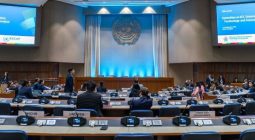

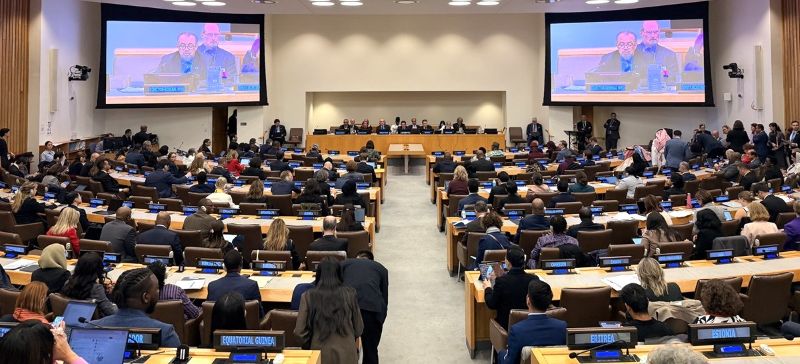
At the second United Nations General Assembly High-level Meeting on Pandemic Prevention, Preparedness and Response, political leaders renewed their commitment to making the world safer from future pandemics, stressing the need for sustained and more equitable investment and action.
The meeting being held on 25 September 2026 at United Nations Headquarters in New York is reviewing progress since the 2023 High-level Meeting and considering a Political Declaration focused on strengthening pandemic prevention, preparedness and response through equity, solidarity, multilateral cooperation and sustainable investment.
The overall theme of the High-level Meeting is on fostering a multilateral and intergenerational approach to prevent, prepare for and respond to pandemics and public health emergencies, through the principles of equity and solidarity.
Leaders recognized the progress made in the past three years to strengthen global systems to detect, prepare for and respond to pandemic threats, including adoption of the WHO Pandemic Agreement and amendments to the International Health Regulations (2005).
Addressing today’s meeting, WHO Director-General Dr Tedros Adhanom Ghebreyesus, however, said that continued action and investment were needed to sustain progress and better prepare the world to respond to threats like COVID-19, which was linked to more than 20 million excess deaths between 2020 and 2023, and wiping over US$ 10 trillion from the global economy.
Countries also stressed the urgent need to successfully finalize negotiations on an annex to the WHO Pandemic Agreement to establish the Pathogen Access and Benefit-Sharing (PABS) system, which is currently being negotiated by WHO Member States.
The Declaration underscores that national health security can only be achieved with global solidarity, and that international cooperation is essential for protecting communities and countries from cross-border threats.
Recognizing that preventing pandemics begins long before an outbreak, the declaration highlights the importance of a One Health approach that addresses the connections between human, animal and environmental health.
As discussions continued throughout the day, leaders taking part in the HLM emphasized that prevention, preparedness and response must remain a sustained political priority, not only during crises but in the years between them. They stressed that protecting the world from future pandemics will require continued political leadership, international cooperation and long-term investment.
Meanwhile, the WHO announced its recommendations for the viral composition of influenza (or ‘flu’) vaccines for use in the 2027 southern hemisphere influenza season. The announcement was made following an international consultation on the composition of influenza virus vaccines.
Seasonal influenza causes substantial illness and many hospitalizations each year. Regular updates to vaccine composition are needed because influenza viruses continually evolve.
From February to August 2026, influenza A(H1N1)pdm09, A(H3N2) and influenza B viruses circulated in varying proportions across all regions of the world, causing disease. Influenza A viruses were the most common in most regions, except Northern and Western Africa, North America and Eastern Asia, where influenza B viruses dominated.