
International Organization for Migration (IOM) indicates that cities become stronger and more inclusive when migrants and displaced people are considered in housing policy, urban planning, and recovery efforts.
According to IOM’s World Migration Report 2026, displacement reached record levels, with more than 120 million people forced to leave their homes. Most displaced people now live in cities or nearby areas, where housing and basic services are often difficult to access.
Housing challenges are not limited to displacement. Around three billion people worldwide live in poor housing conditions, including over 1.1 billion people in informal settlements and more than 300 million people without stable shelter, IOM reported.
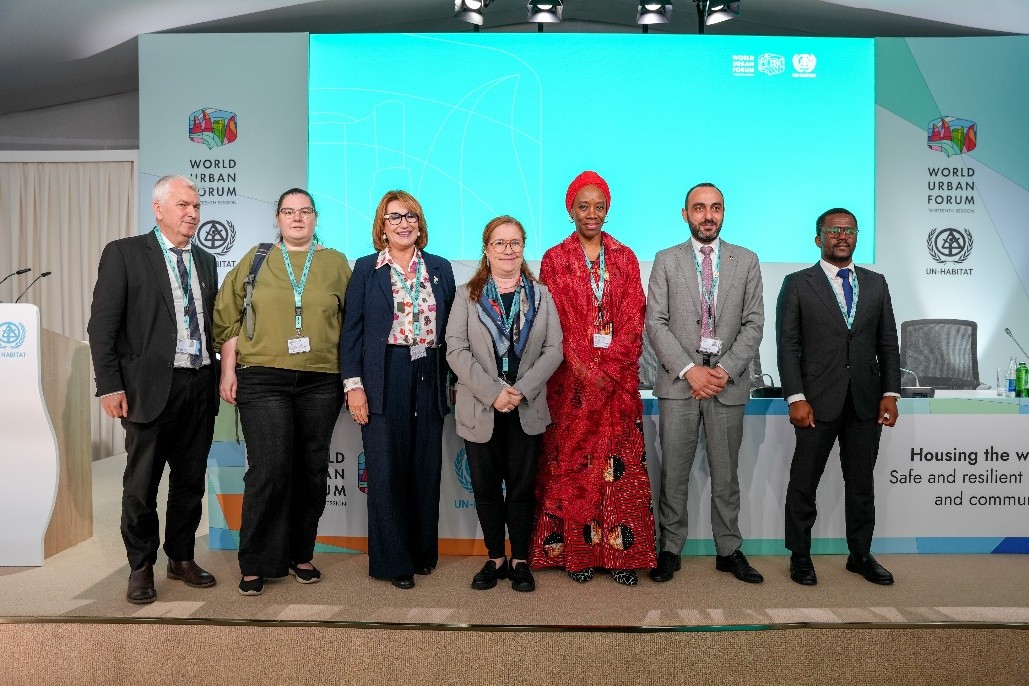
At the 13th World Urban Forum (WUF13) that focused on “Housing the world: Safe and resilient cities and communities,” IOM highlighted the importance of including migrants and displaced people in housing and urban planning. This helps ensure that cities are designed in ways that are safe, fair, and workable for everyone, added IOM.
“Migration is already shaping the urban future. Today, 58 per cent of the world’s population is living in cities and towns, while displacement is becoming increasingly urban,” said IOM Deputy Director General Ugochi Daniels. “When migrants are included in planning, they contribute skills, ideas, and energy that help cities grow and adapt.”
Climate change is also increasing movement into cities, as more people are forced to relocate after floods, droughts, and other impacts.
As host of the Forum, Azerbaijan shared its experience of rebuilding and supporting return to areas affected by conflict. By 2030, the country plans to invest around AZN 30 billion (about USD 17.6 billion) in restoring housing, infrastructure, and services to support return and reintegration, it said.