
Ahead of the International Day for the Elimination of Violence against Women (25 November), the International Federation of Journalists (IFJ) calls on governments, media employers and journalists’ unions to take concrete action against online violence targeting women journalists.
Founded in 1926, IFJ is the world’s largest organisation of journalists, representing 600,000 media professionals in 187 unions and associations in more than 148 countries and is believed as the global voice of journalists.
Echoing this year’s UN call to “Ensure justice, protect survivors, end impunity”, the IFJ urges world governments and the media industry to recognise online abuse as a serious form of gender-based violence and to take concrete measures to prevent it, support victims and hold perpetrators accountable, stated in a IFJ press release.
Online abuse, harassment and intimidation have become an increasingly common pattern for women journalists. Digital attacks are used to intimidate, discredit and silence women journalists – from sexist insults, rape and death threats to doxxing, cyberstalking, gendered disinformation and the circulation of manipulated intimate images.
A recent report from IFJ’s affiliate NUSOJ in Somalia underlined that over 55% of women respondents have experienced online abuse related to their professional activities, including sexualised threats and AI-generated sexual deepfakes.
In Serbia, many female journalists were the target of online misogynistic campaigns by pro-regime media due to their reporting.
In India, investigative journalist Rana Ayyub received over 200 rape and death threats in the days after her phone number was leaked by a right-wing content creator on social platform X.
These attacks can deeply affect journalists’ personal lives, threaten their physical safety, affect their mental health and undermine their ability to do their jobs. They can ultimately lead to self-censorship and withdrawal from public debate- thus affecting media pluralism and the diversity of voices in the public sphere, while severely impacting the public’s right to information.
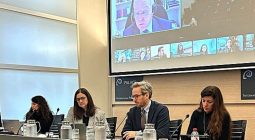
These were some of the highlights of the IFJ Gender Council’s webinar on ‘Navigating online abuse’ held on 18 November, the release added.
The UN’s 2026 UNiTE campaign theme, ‘Ensure justice, protect survivors, end impunity’, stresses the need to strengthen access to justice for all women and girls, provide effective support to survivors and hold perpetrators accountable.
For women journalists, reporting online abuse too often means facing silence or inadequate responses from their employers, platforms and sometimes even law enforcement authorities., it reads.
An IFJ survey conducted in 2018 showed that only half of the victims of online abuse (53%) reported the attacks to their media management, union or the police, and in two-thirds of the cases nothing was done.
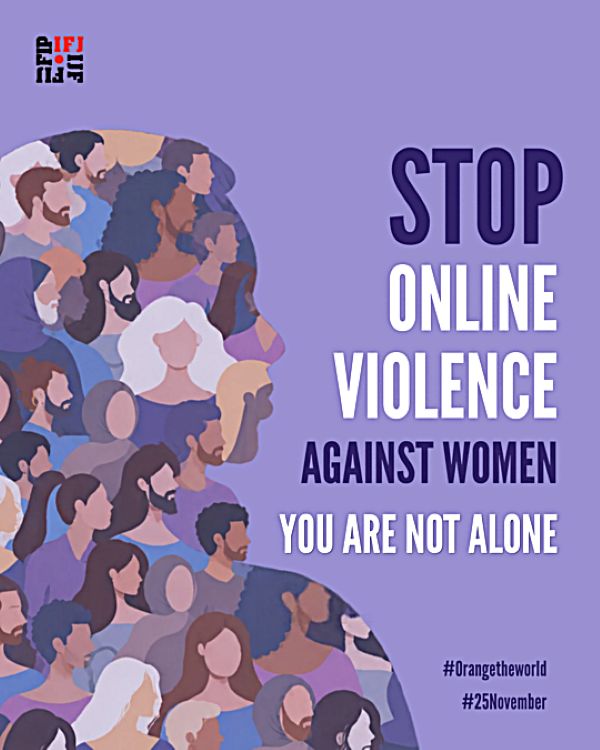
Through its ‘You are NOT alone’ campaign, the IFJ calls on media organisations and journalists’ unions to break this silence, and to ensure that women journalists targeted by online abuse receive the support and protection they need through adequate reporting mechanisms.
The campaign provides practical resources and guidance for journalists’ unions and media organisations to address online harassment, strengthen support mechanisms and share good practices.
IFJ Gender Council Chair María Ángeles Samperio said, “Online abuse should not be an inevitable consequence of being a woman in the public eye, nor should it simply be part of the job of being a journalist. It is gender-based violence and must be treated as a serious occupational health and safety issue.”
“Women journalists should not have to face these attacks alone, nor should they have to choose between their safety and their right to do their jobs. Unions and journalists’ associations have a crucial role to play in challenging this violence and ensuring that it is taken seriously,” she added.
IFJ President Zuliana Lainez said, “Media employers have a duty to provide a safe working environment and establish effective mechanisms for women journalists to report online abuse as well as to receive appropriate protection and support. We urge our affiliates to negotiate strong workplace policies with employers, demand greater accountability from online platforms and ensure that journalists targeted by online abuse are not left to deal with its consequences alone.”
The IFJ urges:

Governments to ensure that online violence against women journalists is recognised and effectively addressed through appropriate legislation, independent investigations and access to justice.
The IFJ calls in particular for an urgent implementation of ILO Convention 190 on violence and harassment in the world of work.
Media employers to identify online abuse as a health and safety issue and to act accordingly by adopting clear policies and procedures to prevent and respond to online abuse.
Social media platforms take responsibility for the abuse taking place on their services, improve reporting and moderation mechanisms, act promptly on threats and harassment, and ensure transparency and accountability.
Journalists’ unions to support women members facing online abuse, provide guidance and assistance, negotiate effective workplace policies with media and challenge the normalisation of gender-based violence in journalism.
The federation calls on all its affiliates to join the UN’s 16 Days of Activism against Gender-Based Violence (25 November-10 December) to raise awareness of online abuse and share initiatives that make both newsrooms and the wider media industry safer for women journalists, it stated.