

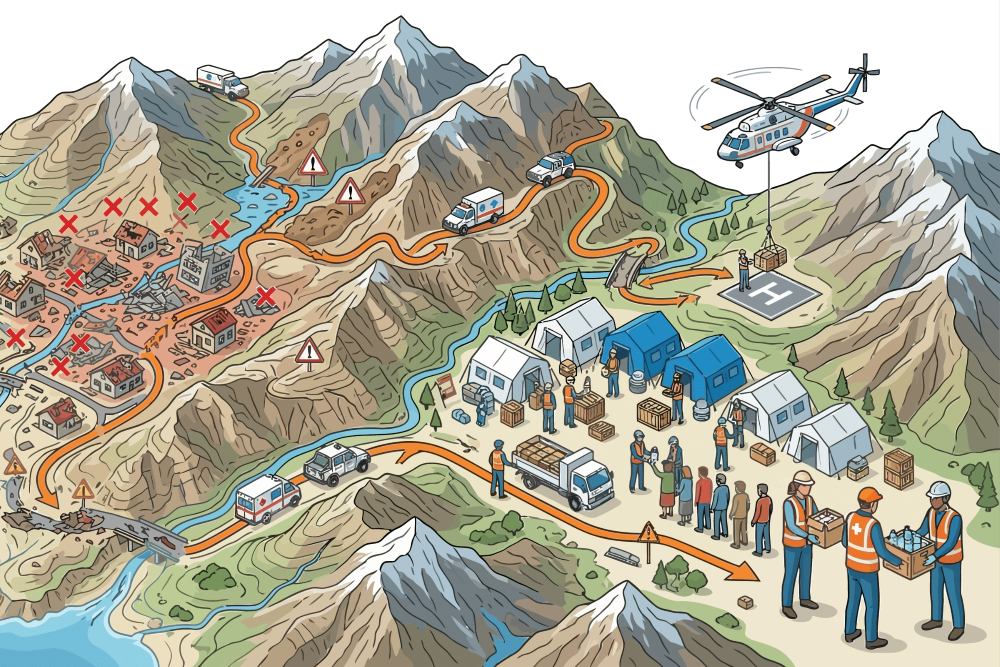
Across Asia and the Pacific, Governments already know which measures can keep transport working when hazards strike. The priority is to put them into daily decisions, update design standards for today’s climate, build alternative routes and contingencies into networks, improve hazard-specific early warning across borders and direct more transport finance towards adaptation. Resilience is not only about stronger structures. It is about keeping people, goods and essential services moving and recovering quickly when disruption occurs.
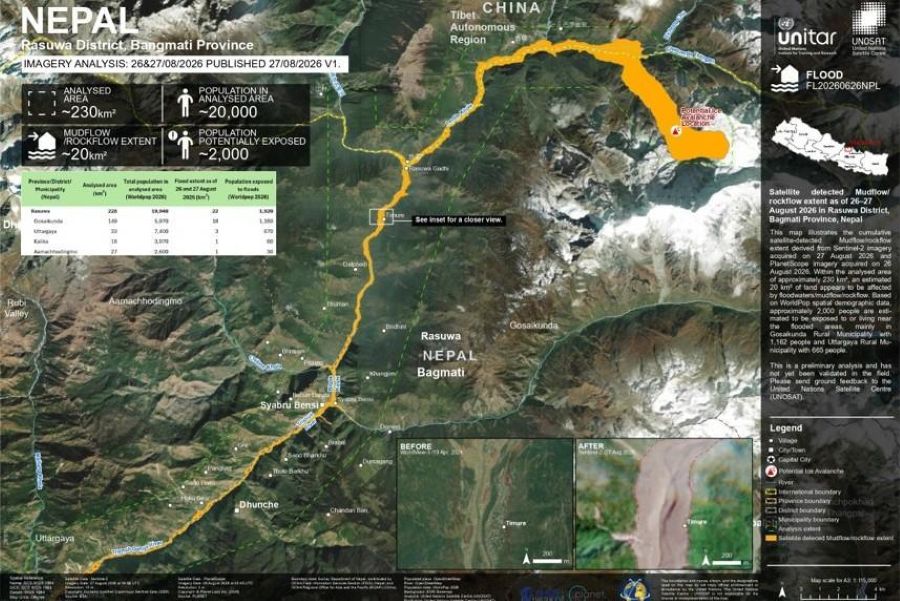
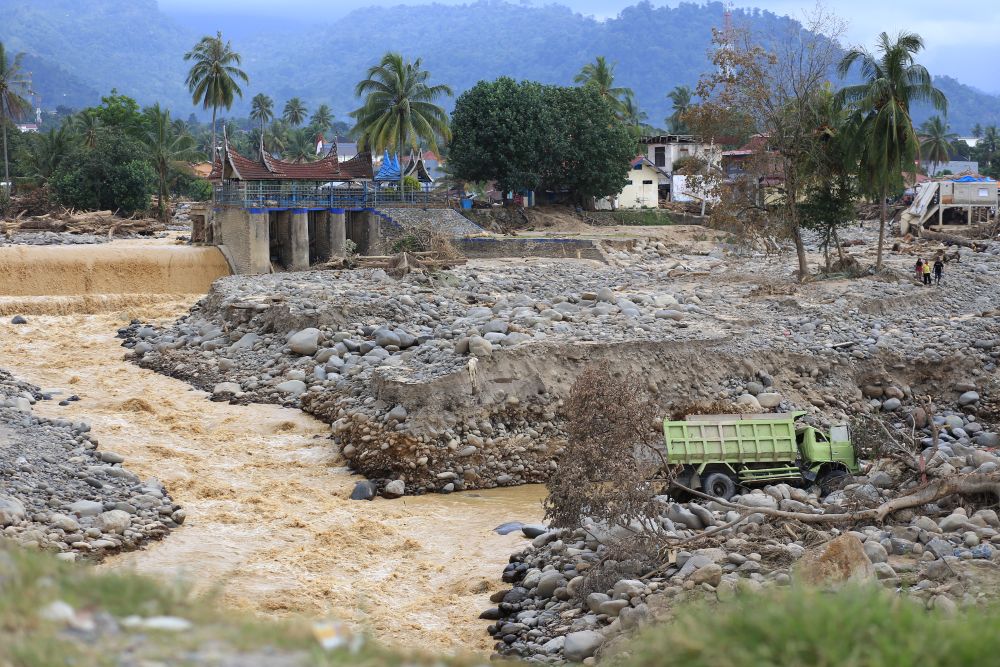
Nepal shows why these measures cannot wait. On 26 August 2026, an ice-rock avalanche blocked the Lhende River about 18 kilometres above the Nepal–China border. When the blockage failed, floodwaters tore down the Bhote Koshi gorge, taking out the Rasuwagadhi border post and the only road linking Kathmandu to Tibet overland. By mid-September, Nepal’s Department of Roads estimated damage to roads and bridges alone at around US$195 million, with rebuilding expected to cost around US$325 million. About 40 kilometres of road and more than 41 motorable bridges were lost between Rasuwa and Dhading. To restore road links quickly, the Government of Nepal has asked neighbouring countries to install 42 Bailey bridges. These are prefabricated steel spans which arrive as flat-pack kits and are assembled on site, so they can carry traffic long before a permanent replacement is ready.
The lesson is practical. A resilient network must resist, absorb, adapt and recover bridges designed for expected hazards. It should include alternative routes when one link closes with transport operators able to reroute services and repair teams, materials ready before they are needed.
First, design standards need to reflect current risks. 60 per cent of the region’s road design codes predate 2015 and rely on outdated climate data. Yet building resilience into new infrastructure adds about 3 per cent to overall investment needs, provided planners know where the hazards are. The World Bank estimates return of about four dollars for every dollar invested. With Asia-Pacific region requiring roughly US$31 trillion for transport infrastructure between 2025 and 2035, climate-proofing new investment now is far cheaper than rebuilding later.
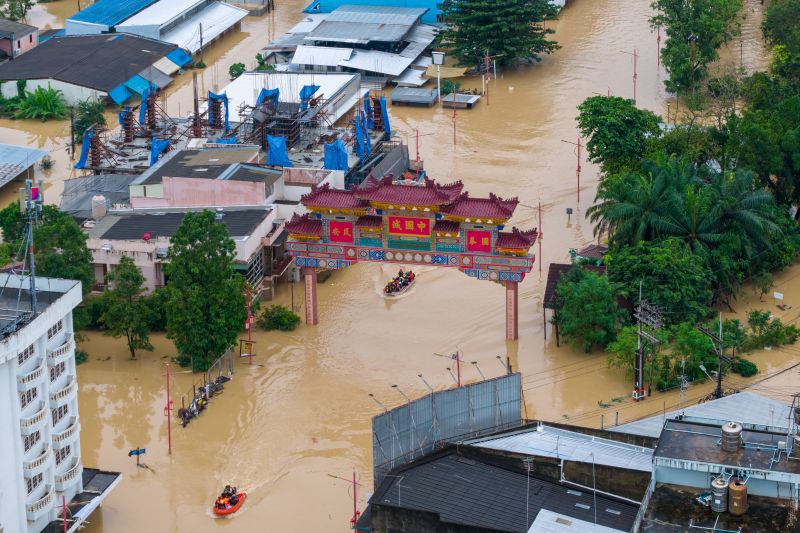
Second, plan for continuity, not only repair. Damaged roads and bridges are only part of the bill. Coalition for Disaster Resilient Infrastructure (CDRI) estimates service-disruption losses at 7.4 times direct repair costs. Hat Yai’s November 2025 floods illustrate the wider impact. Damage in the city was estimated at US$372 million, while losses across nine affected southern provinces reached US$4.3 billion. Standby emergency works contracts, alternative routes, live travel information and pre-positioned materials can determine how quickly a city or corridor restarts.
Third, warnings must match the hazard and cross borders. Nepal’s gauges were built for monsoon floods; they could not see a rapidly forming lake upstream in another country. Shared monitoring and thresholds designed for fast-onset hazards can turn warning time into precious minutes. Japan shows what preparedness can achieve. During the 2011 Tohoku earthquake, sensors cut power to bullet trains before the strongest shaking arrived, and no Shinkansen passenger was killed or injured. The technology worked because it was backed by years of investment in stronger infrastructure and hazard-specific systems.
Fourth, resilience finance must catch up with transport risk. Climate disasters cause an estimated US$15 billion to US$22 billion in transport infrastructure damage each year, with Asia bearing around 60 per cent. The world loses roughly ten dollars of transport infrastructure for every dollar it spends protecting it. The pattern holds regionally too. Around a third of the US$746 billion in Asia-Pacific climate finance of 2022 went to transport, but only 0.13 per cent of that was set aside for adaptation. The rest went to cutting emissions. Across 37 countries in the region, just 5 per cent of transport climate measures deal with adaptation and most adaptation finance arrives as loans, so the countries that did least to cause the warming are borrowing to protect themselves from it. Resilience needs to become a core transport investment criterion, not an afterthought.
It is a fact that relief money moves faster than regular investment. Nepal’s Prime Minister’s Disaster Relief Fund has taken in more than US$42 million since 26 August, helped by an online donation gateway from people all over the world and a month’s salary from every cabinet member.
Not every solution requires major capital. Community road maintenance groups can clear drains, repair minor damage and respond quickly to landslides. Nature-based measures such as bioswales, rain gardens, mangroves and vegetated slopes can reduce flooding and erosion. Footpaths and accessible routes also become critical links after roads close, especially for older people and persons with disabilities.
The region will invest heavily in transport over the coming decades. The opportunity is to make every investment do more: design for today’s hazards, build redundancy into networks, prepare operators and communities before disruption and finance adaptation at the scale of the risk. Japan’s trains stopped in time because decisions had been made years earlier. The same principle applies across the region: how quickly transport recovers from the next disaster is being decided now, in the standards, budgets and contracts already on desks.
Credit: ESCAP Newsletter

Chief of Transport Research and Policy Section

Individual Contractor, Transport Division