
South Asian Association for Regional Cooperation
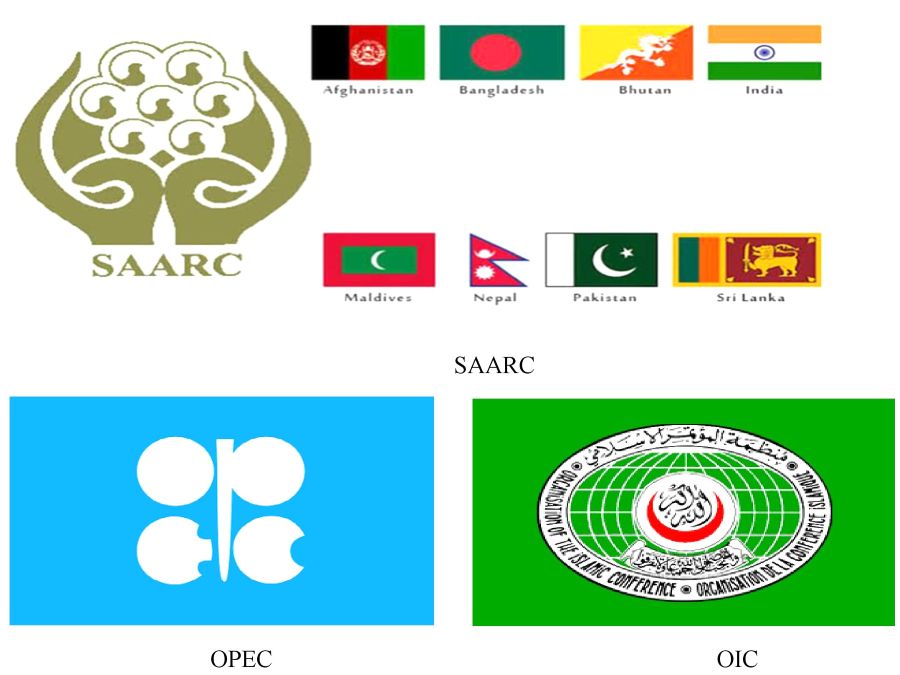
The South Asian Association for Regional Cooperation (SAARC) was established with the signing of the SAARC Charter in Dhaka on 8 December 1985 by Bangladesh, Bhutan, India, Maldives, Nepal, Pakistan and Sri Lanka.
SAARC aims to promote the welfare of the peoples of South Asia and to improve their quality of life accelerating economic growth, social progress and cultural development in the region providing opportunity to every individual to live in dignity and to realize their full potentials
To promote and strengthen collective self-reliance to contribute with mutual trust, understanding and common interest appreciation in international and regional forums.
SAARC Secretariat has been established in Kathmandu on 17 January 1987.
Though SAARC has seven–Bangladesh, Bhutan, India, Maldives, Nepal, Pakistan, and Sri Lanka– initial member countries serving as an intergovernmental organization SAARC now comprises of eight sovereign states with full membership after Afghanistan officially joined the regional organization on April 3, 2007, during the 14th SAARC Summit in New Delhi.
Australia, China, the European Union, Iran, Japan, Mauritius, Myanmar, South Korea, and the United States are the Observer members.
The First Summit of SAARC was held in December 1985 in Dhaka, Bangladesh. The second summit was held in Bangalore, India in 1986. The third summit was held in Kathmandu, Nepal in 1987. The fourth summit was held in Islamabad, Pakistan in 1988. The fifth summit was held in Male, Maldives in 1990.
The sixth summit was held in Colombo, Sri Lanka in 1991. The seventh summit was held in Dhaka, Bangladesh in 1993. The eighth summit was held in New Delhi, India in 1995. The ninth summit was held in Male, Maldives in 1997. The tenth summit was held in Colombo, Sri Lanka in 1998.
The eleventh summit was held in Kathmandu, Nepal in 2002, The twelfth summit was held in Islamabad, Pakistan in 2004. The thirteenth summit was held in Dhaka, Bangladesh in 2005. The fourteenth summit was held in New Delhi, India in 2007. The fifteenth summit was held in Colombo, Sri Lanka in 2008.
The sixteenth summit was held in Thimpu, Bhutan in 2010. The seventeenth summit was held in Addu City, Maldives in 2011. The 18th SAARC summit was held in Kathmandu, Nepal in 2014.
The 19th Summit was scheduled to be held in 2016 in Islamabad, Pakistan, but could not held yet.
Organization of the Petroleum Exporting Countries
Organization of the Petroleum Exporting Countries (OPEC) is a permanent intergovernmental organization founded in Baghdad in September 1960. with the signing of an agreement in September 1960 by five founding-member countries namely Islamic Republic of Iran, Iraq, Kuwait, Saudi Arabia and Venezuela.
Headquartered in Vienna, Austria, it unifies petroleum policies among member nations to stabilize global oil markets, secure fair prices for producers, and ensure a regular supply for consumers.
Qatar joined OIC 1961 but exited on 1 January 2019. Likewise, Indonesia joined in 1962 but suspended its membership in January 2009. Again in January 2016 it reactivated but finally decided to suspend its membership effective 30 November 2016.
Angola adopted membership in 2007 but withdrew its membership effective 1 January 2024.
Ecuador joined OIC in 1973 but suspended its membership in December 1992. Again rejoined OPEC in October 2007 but decided to withdraw its membership of OPEC effective 1 January 2020.
Libya joined in 1962, the United Arab Emirates became an OIC member in 1967, Algeria in 1969, Nigeria in 1971.
Gabon joined OIC in 1975 but terminated its membership in January 1995. However, it rejoined the Organization in July 2016.
Equatorial Guinea in 2017 whereas Congo entered OIC in 2018.
This means, currently, the Organization has a total of 12 Member Countries.
They are founding members: Iran, Iraq, Kuwait, Saudi Arabia, and Venezuela.
The other members include Algeria, Congo, Equatorial Guinea, Gabon, Libya, Nigeria, the United Arab Emirates.
The main aims of OIC are to coordinate and unify petroleum policies, stabilize oil prices to avoid harmful market fluctuations, ensure efficient, economic, and regular supply to consuming nations and provide a fair return on capital for industry investors.
Organization of Islamic Cooperation
The Organization of Islamic Cooperation (OIC) is the second-largest intergovernmental organization globally after the United Nations, featuring 57 member states spanning four continents. Founded in September 1969, its headquarters are located in Jeddah, Saudi Arabia, and it serves as the collective voice of the Muslim world.
Founded: September 25, 1969, in Rabat, Morocco, following an arson attack on the Al-Aqsa Mosque, the OIC aims to represent the Muslim world in order to protect and safeguard interests of Muslims in the spirit of promoting international peace, security and harmony as well as inter-faith dialogue among various people of the world.
The headquarters of the Organization of Islamic Cooperation (OIC) is located in Jeddah, Saudi Arabia. The OIC maintains offices in locations like New York, Geneva, and Brussels, alongside other representations.
Membership: 57 countries across Asia, Africa, Europe, and South America.
Supreme Authority: The Islamic Summit, which convenes once every three years with kings and heads of state.
Core Objectives: Safeguard and protect the interests of the Muslim world. Promote international peace, harmony, and solidarity. Protect Islamic holy sites and support self-determination for Muslim peoples. Foster cooperation in economic, social, cultural, and scientific fields.
Organization of Islamic Cooperation formerly the Organization of the Islamic Conference, is an intergovernmental organization founded in 1969 consists of 57 member states, 48 of which are Muslim-majority.
OIC has permanent delegations to the United Nations and the European Union. Its official languages are Arabic, English, and French. It operates affiliated, specialized, and subsidiary organs within the framework of OIC Charter.
Member states had a collective population of over 1.8 billion as of 2015, accounting for just under a quarter of the world’s population. The collective area is 31.66 m km
28 From Africa: Algeria, Benin, Burkina Faso, Cameroon, Chad, Comoros, Djibouti, Egypt, Gabon, Gambia, Guinea, Guinea-Bissau, Ivory Coast, Libya, Mali, Mauritania, Morocco, Mozambique, Niger, Nigeria, Senegal, Sierra Leone, Somalia, Sudan, Togo, Tunisia, Uganda
27 From Asia: Afghanistan, Azerbaijan, Bahrain, Bangladesh, Brunei, Indonesia, Iran, Iraq, Jordan, Kazakhstan, Kuwait, Kyrgyzstan, Lebanon, Malaysia, Maldives, Oman, Pakistan, Palestine, Qatar, Saudi Arabia, Syria, Tajikistan, Turkey, Turkmenistan, United Arab Emirates, Uzbekistan, Yemen
1 From Europe Albania
1 From Americas Guyana
OIC has five official observer countries: Bosnia and Herzegovina, Central African Republic, Russian Federation, Thailand, Turkish Republic of Northern Cyprus.
To be continued………