

An international intergovernmental organization (IGO) is an organization that plays significant roles in modern world politics providing vital assistance.
IGO were established with the mandate of formal understandable agreement signed between sovereign states aiming cooperation on various issues at global, regional or bilateral level.
While seeing the world’s growing pros and cons situation, a lot of intergovernmental organizations exist in the global arena. Record shows the number of these international intergovernmental organizations have been increasing may be for regional or international level to function and governance on social to political, security to economic, cultural to common problems.
Due to advancement the world is narrowing and interconnected and the issues are being addressed globally. Furthermore, the issues are becoming internationalize and resulting more or less effectively.
United Nations
The United Nations is an international intergovernmental organization established by the signing of the Charter of the United Nations on 26 June 1945.
The then US President Franklin D. Roosevelt, the then Prime Minister of United Kingdom Winston Churchill, the then Soviet Prime Minister Joseph Stalin and Chiang Kai-shek of China consider as BIG FOUR ” (the US, UK, Soviet Union, and China) are the key architect leaders in establishing the United Nations concept. France was joined in this mission later. However, Roosevelt is considered a founder of the UN.
Thus, China, France, Russia, the United Kingdom, and the United States are five permanent members of the United Nations Security Council.
51 member countries that signed the UN Charter on June 26, 1945, and officially came into existence on October 24, 1945.
Among China, France, Russia, the United Kingdom, and the United States any one of these five nations can block any substantive resolution as they are the Permanent Members of the Security Council. They hold permanent status on the 15-member Security Council, unlike the 10 non-permanent members who rotate on two-year terms.
There are 193 member states in the United Nations. All of these sovereign countries are represented in the UN General Assembly. There are 2 non-member observer states—the Holy See (Vatican City) and the State of Palestine.
The United States is the largest contributor to the United Nations by a wide margin, providing the most funds through mandatory and voluntary payments, followed by China and Japan. USA accounts 22% of the UN’s core regular budget whereas China bears around 20% and Japan assesses roughly 6.9% to 8% of core budgets.
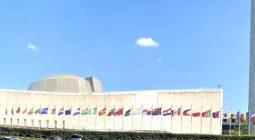
The United Nations’ headquarters is in New York City of the United States along the East River in Midtown Manhattan.
The main purpose of the United Nations is to keep world peace, stop wars, help countries be friends, protect human rights, and solve big global problems like hunger, disease, and poverty. It acts as a safe meeting place for all nations to talk and work together. Keep global peace: Stop fights and fix arguments using peaceful talks or peace troops.
Core aim is to Keep Global Peace, Build Good Friendships, Help People in Need and Work as A Team.
The United Nations Secretariat carries out the day-to-day work of the UN as mandated by the General Assembly and the Organization’s other main organs. The Secretary-General is the head of the Secretariat, which has tens of thousands of UN staff members working at duty stations all over the world. UN staff members are recruited internationally and locally, and work in duty stations and on peacekeeping missions. Serving the cause of peace in a violent world is a dangerous occupation. Since the founding of the United Nations, hundreds of brave men and women have given their lives in its service.
The daily administration and UN’s program of works are being implemented through the UN Secretariat located in New York City, USA. The Secretary-General is the chief administrative officer of the United Nations and head of the UN Secretariat which also oversees three major Offices Geneva, Nairobi, and Vienna located outside of its Headquarters and five Regional Economic Commissions located in Addis Ababa, Bangkok, Beirut, Geneva and Santiago.
The UN General Assembly (UNGA) is the main policy-making organ of the Organization where all nations’ representatives gather for multilateral discussion of the full spectrum of international issues covered by the Charter of the United Nations.
In UNGA, each of the 193 Member States of the United Nations has an equal vote.
Besides, meeting in regular sessions from September to December each year, and as required, UNGA discusses specific issues through dedicated agenda and adoption of resolutions.
The UNGA also makes decisions on appointing the Secretary-General on the recommendation of the Security Council, electing the non-permanent members of the Security Council, approving the UN budget.
Nepal applied for UN membership on the vector of sovereignty on April 8, 1949. But the then Union of Soviet Socialist Republic (USSR) vetoed Nepal’s membership application that had delayed Nepal’s joining the United Nations.
However, after requesting the membership, Nepal officially became a full-fledged member of the United Nations on December 14, 1955.
Today, Nepal is one of the major troop and police contributors to global UN peacekeeping missions.
According to the UN list, following Intergovernmental Organizations have been maintaining Permanent Offices at UN Headquarters in New York and received a standing invitation to participate as Observers in the UN the General Assembly sessions and the works.
African Union, Asian-African Legal Consultative Organization, Caribbean Community (CARICOM), Central American Integration System (Sica), Commonwealth, Cooperation Council for the Arab States of the Gulf, Economic Community of Central African States, Economic Community of Western African States, European Union, International Chamber of Commerce, International Criminal Police Organization (INTERPOL), International Development Law Organization, International Institute for Democracy and Electoral Assistance, International Organization of the Francophonie, International Renewable Energy Agency, International Union for Conservation of Nature, International Youth Organization for Ibero-America, League of Arab States, Organization for Economic Co-operation and Development (OECD), Organization of American States (OAS), Organization of Islamic Cooperation, Parliamentary Assembly of the Mediterranean, Partners in Population and Development, South Centre, University for Peace, International Committee of the Red Cross, International Federation of Red Cross and Red Crescent Societies, International Olympic Committee, Inter-Parliamentary Union, Sovereign Order of Malta.
Likewise, following Intergovernmental Organizations are not maintaining Permanent Offices at the UN Headquarters in New York but having received a standing invitation to participate as Observers in the sessions and the work of the General Assembly.
African Development Bank, Agency for the Prohibition of Nuclear Weapons in Latin America and the Caribbean, Amazon Cooperation Treaty Organization (ACTO), Andean Development Corporation, ASEAN+3 Macroeconomic Research Office, Asian Development Bank, Asian Forest Cooperation Organization (AFoCO), Asian Infrastructure Investment Bank, Association of Caribbean States, Association of Southeast Asian Nations, Black Sea Economic Cooperation Organization, Central American Bank for Economic Integration, Central Asia Regional Economic Cooperation Institute (CAREC), Central European Initiative, Collective Security Treaty Organization, Common Fund for Commodities, Commonwealth of Independent States, Community of Portuguese-speaking Countries, Community of Sahelo-Saharan States, Conference of Ministers of Justice of the Ibero-American Countries, Conference on Interaction and Confidence-building Measures in Asia, Council of Europe, Customs Cooperation Council (World Customs Organization), Developing Eight Countries Organization for Economic Cooperation, Digital Cooperation Organization (DCO), East African Community, Economic Community of Central African States, Economic Community of West African States, Economic Cooperation Organization, Energy Charter Conference, Eurasian Development Bank, Eurasian Economic Community, Eurasian Group on Combating Money Laundering and Financing of Terrorism, European Organization for Nuclear Research (CERN), European Public Law Organization , Fund for the Development of the Indigenous Peoples of Latin America and the Caribbean, Global Dryland Alliance , Global Fund to Fight AIDS, Tuberculosis and Malaria, Global Green Growth Institute, Group of Seven Plus, Hague Conference on Private International Law, Ibero-American Conference, Indian Ocean Commission, Indian Ocean Rim Association, Inter-American Development Bank, Intergovernmental Authority on Development, International Anti-Corruption Academy, International Centre for Migration Policy Development, International Chamber of Commerce, International Civil Defence Organization (ICDO), International Conference on the Great Lakes Region of Africa, International Council for the Exploration of the Sea, International Fund for Saving the Aral Sea, International Humanitarian Fact-Finding Commission, International Hydrographic Organization, International Institute for the Unification of Private Law (UNIDROIT), International Network for Bamboo and Rattan (International Bamboo and Rattan Organization), International Solar Alliance, International Think Tank for Landlocked Developing Countries, Islamic Development Bank Group, Italian-Latin American Institute, Latin American and Caribbean Economic System, Latin American Integration Association, Latin American Parliament, New Development Bank, OPEC Fund for International Development, Organization of African, Caribbean and Pacific States, Organization of Eastern Caribbean States, Organization of Ibero-American States (OEI), Organization for Security and Cooperation in Europe, Organization for Democracy and Economic Development – GUAM, Pacific Community, Pacific Islands Development Forum, Pacific Islands Forum, Pan African Intergovernmental Agency for Water and Sanitation for Africa, Permanent Court of Arbitration, Regional Centre on Small Arms and Light Weapons in the Great Lakes Region, the Horn of Africa and Bordering States, Shanghai Cooperation Organization, Small Island Development States Dock (SIDS DOCK), South Asian Association for Regional Cooperation, South Centre, Southern African Development Community, Union for the Mediterranean, Union of South American Nations, West African Economic and Monetary Union.
To be continued………..