
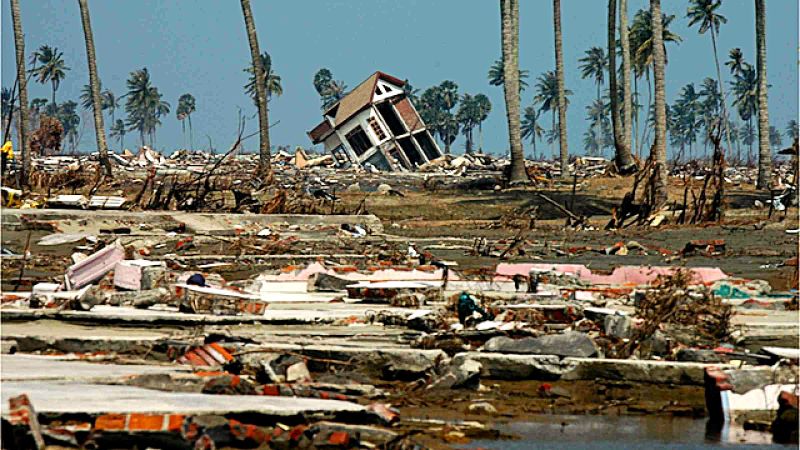
World Tsunami Awareness Day is observed around the world on November 5 Tuesday. On December 26, 2004, an earthquake in the Indian Ocean caused a devastating tsunami that tragically claimed the lives of around 230,000 people and affected 14 countries.
This event marked the first major global disaster of the 21st century and remains one of the deadliest in recent history.
International days are marked to educate the public on issues to embrace the topic as a powerful advocacy tool to give information to the people who were born after the event and share the experiences by the older survivors they have learned.
Tsunamis are giant waves caused by earthquakes or volcanic eruptions under the sea. The speed of tsunami waves depends on ocean depth rather than the distance from the source of the wave.
Tsunamis can be deadly. Volcanic eruptions, submarine landslides, and coastal rock falls can also generate a tsunami, as can a large asteroid impacting the ocean. They originate from a vertical movement of the sea floor with the consequent displacement of water mass.
Tsunamis are most often generated by earthquake-induced movement of the ocean floor.
The word “tsunami” comprises the Japanese words “tsu” (meaning harbour) and “nami” (meaning wave). A tsunami is a series of enormous waves created by an underwater disturbance usually associated with earthquakes occurring below or near the ocean.
In December 2015, the UN General Assembly designated 5 November as World Tsunami Awareness Day, calling on countries, international bodies and civil society to raise tsunami awareness and share innovative approaches to risk reduction.
This year’s World Tsunami Awareness Day theme aligns with the International Day for Disaster Risk Reduction, and the Summit of the Future, focusing on “youth and future generations.”
So far, these hugely powerful wave systems – typically triggered by underwater earthquakes, volcanic eruptions, or landslides – have caused more than 260,000 deaths over the past century, with economic losses surpassing $280 billion.
Delivering his message, the UN Secretary General António Guterres said that “2024 marks the 20th anniversary of the Indian Ocean Tsunami, one of the deadliest disasters, that claimed over 230,000 people’s lives and billions of dollars properties.”
“Approximately 700 million people worldwide remain at risk from tsunamis,” Guterres warned. Saying “Education is vital to saving lives,” Guterres urged all the concerns to ensure populations understand evacuation procedures.
Tsunamis are rare but it is earth’s deadliest natural hazard, reports the UN Office for Disaster Risk Reduction. Thus, early warning systems are a must as well as early action are also an effective tool to protect people, saving lives, and preventing the hazard from becoming a disaster.