
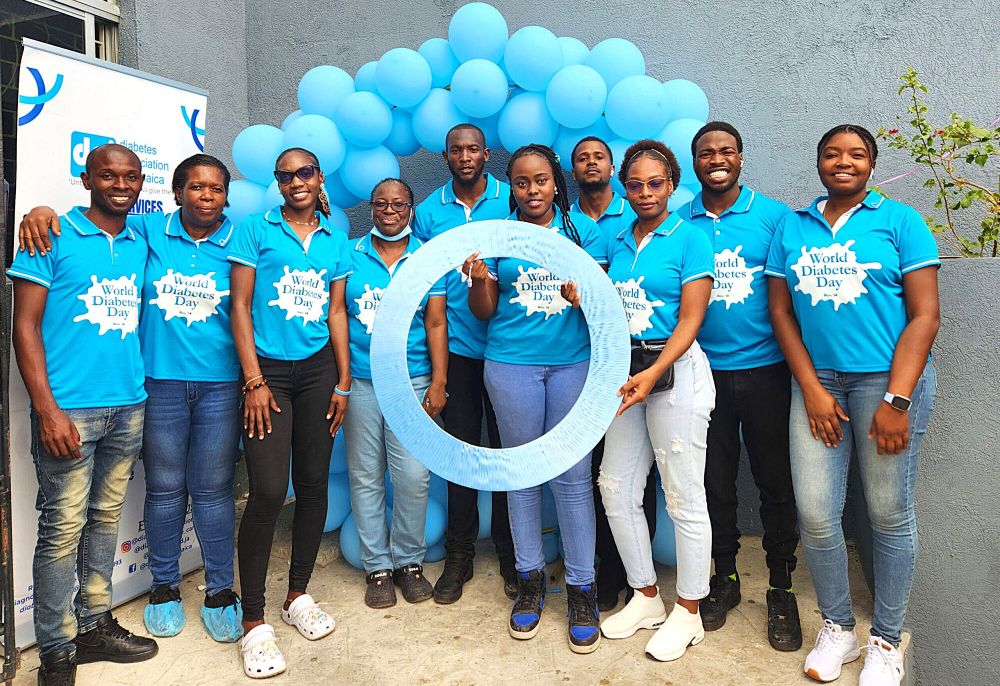
Every year on November 14 the world observes World Diabetes Day.
This year also the day was observed on November 14, 2026, with the global campaign theme “Early Action on Diabetes”.
More than 100 years after the discovery of insulin, many people living with type 1 diabetes still cannot access the insulin and care they need to survive.
Type 1 diabetes is a lifelong condition in which the body does not produce enough insulin, making people dependent on daily insulin to survive.
Marking World Diabetes Day 2026, the World Health Organization (WHO) has issued its first guidelines on the diagnosis and management of type 1 diabetes in adults, with recommendations designed to apply across all settings, including low-resource, emergency and humanitarian settings.
In 2025, around 9.5 million people lived with type 1 diabetes globally, with an additional 500 000 diagnosed in the same year. While often considered primarily a childhood condition, type 1 diabetes is increasingly affecting adults.
“Insulin is a lifesaving treatment, discovered more than 100 years ago. Yet many people with type 1 diabetes do not have access to affordable and high-quality insulin,” said Dr Søren Brostrøm, WHO Director of Non-Communicable Diseases and Mental Health.
“The new WHO guidelines provide evidence-based recommendations to help countries deliver the best possible care, including in settings where resources are limited and health services are disrupted.”
In the new guidelines, WHO recommends that people with type 1 diabetes receive insulin injections several times per day, with doses adjusted to blood glucose levels. Human insulin, a manufactured medicine that works like insulin naturally produced by the human body, is an appropriate and effective option. Other types of insulin can be used when needed.
The new guidelines support efforts to achieve WHO targets to ensure that all people with type 1 diabetes have access to affordable insulin treatment and blood glucose self-monitoring by 2030.
Diabetes can lead to serious complications, including blindness, kidney failure, heart attacks, stroke, and lower-limb amputation. The global burden of diabetes has more than quadrupled since 1990.
In 2022, 830 million people were living with diabetes worldwide, the majority with type 2 diabetes. More than 40% of people with diabetes are unaware that they have the condition and therefore remain undiagnosed.
Meanwhile, a new study by the International Diabetes Federation (IDF) suggests that efforts to close the diabetes diagnosis gaps are failing. More than a quarter of a billion (252 million) adults worldwide are living with diabetes without knowing it. Most have type 2 diabetes.
The research, commissioned by the IDF, reveals a clear optimism bias. While more than eight in ten (84%) adults at risk of developing type 2 diabetes agreed that having a diabetes risk check was worthwhile, fewer than one in six (15%) believed they were likely to develop the condition. Barriers included fear of the result (28%), cost (26%), difficulty getting an appointment (20%), and a lack of time (17%).
“A quarter of a billion people are living with diabetes without knowing it. Our research shows that many people at risk know diabetes is a problem. They just don’t believe it applies to them. Awareness of diabetes is not the same as awareness of your own risk, said Professor Schwarz, President of IDF. “We cannot close the diagnosis gap if the people most in need of testing don’t know their own risk factors.”
Diabetes is one of the world’s fastest-growing health challenges, placing increasing pressure on individuals, families and health systems. Type 2 diabetes can develop gradually, often without obvious symptoms.
The World Health Organization has established a global target for 80% of people living with diabetes to be diagnosed by 2030. Yet current IDF estimates show that only 57% know they have the condition.
Preliminary analysis accompanying IDF’s global diagnosis scorecard suggests that approximately 134 million additional diagnoses would be required to reach the 80% target, equivalent to around 89,000 diagnoses every day between World Diabetes Day 2026 and the end of 2030.
“Diabetes is responsible for 3.4 million deaths each year. It is mainly impacting low- and middle-income countries and putting a huge stress on fragile health systems and health workers,” said Professor Schwarz.
Commissioned by IDF, an umbrella organisation of 264 national diabetes associations in 163 countries and territories, and conducted by Global Health Strategies (GHS).