
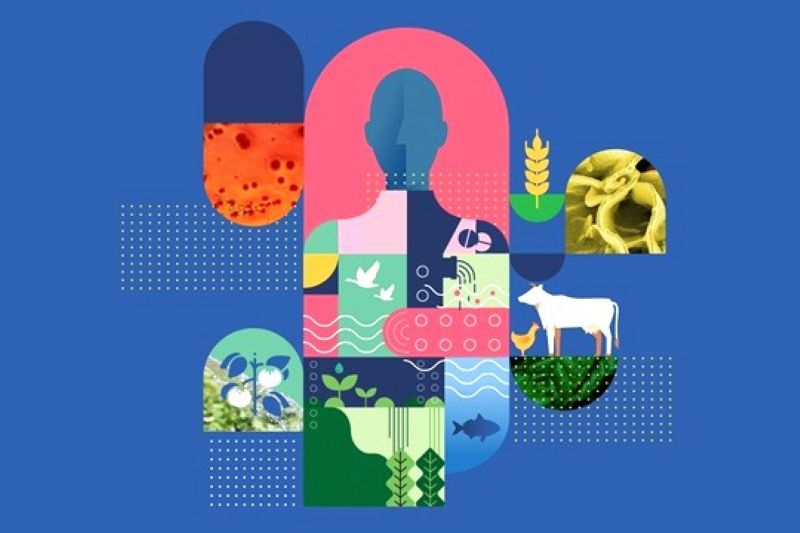
The new findings released today by the World Health Organization (WHO) ahead of World AMR Awareness Week, show that 173 countries report having developed plans to address AMR, more than double the 79 countries that reported doing so in 2017.
World AMR Awareness Week (WAAW) is an annual global campaign held from 18 to 24 November to raise awareness and understanding of antimicrobial resistance (AMR) promoting action to prevent the emergence and spread of drug-resistant infections.
“One Health, one action: Prevent AMR now” is the theme of this year to take action to prevent AMR.
As more countries are taking steps to tackle antimicrobial resistance (AMR), major gaps that remain in testing and treatment mean that many patients are still at risk. When medicines lose their effectiveness against resistant bacteria and other microbes, common infections become harder to treat and routine medical procedures, including surgery, childbirth and cancer care, become riskier.
In 2023, approximately 1 in 6 laboratory-confirmed bacterial infections worldwide were resistant to antibiotics, highlighting the growing threat to patients, WHO says.
But having a plan does not necessarily mean patients are protected. Only 22% of countries report having both the necessary funding and full implementation of national AMR action plans. This leaves major gaps worldwide along the pathway of care, from preventing infections to diagnosing and treating patients, as well as detecting resistance trends and taking control measures.
The findings are included in the latest Tracking Antimicrobial Resistance Country Self-Assessment Survey (TrACSS), completed by 183 countries (94% of Member States) in 2026.
Access to diagnostic testing helps ensure patients receive the right treatment at the right time. However, such testing is inadequate in most countries. Only 36% of countries report having a national reference laboratory equipped to test the selected bacteria and fungi. This falls far short of the global target of 80% of countries having comprehensive bacterial and fungal resistance testing capacity by 2030.
To help countries close the gaps, WHO released two new practical tools as part of the AMR Diagnostic Initiative. The tools provide a prioritized catalogue of diagnostic tests and step-by-step methods to help clinical laboratories diagnose bacterial and fungal infections.
Eritrea eliminates trachoma
The WHO has validated Eritrea’s elimination of trachoma as a public health problem, making it the 11th country in WHO’s African Region and the 34th globally to reach this major milestone.
Eritrea became the 66th country globally and the 23rd in the WHO African Region to have eliminated at least one neglected tropical disease.
Trachoma is the world’s leading infectious cause of blindness. It is caused by the bacterium Chlamydia trachomatis and spreads through contact with eye and nasal discharge from infected individuals.
Trachoma is one of the 21 diseases and disease groups currently covered by the road map for neglected tropical diseases 2021–2030. NTDs affect more than 1 billion people, particularly people living in poverty and in remote or fragile settings with limited access to essential health services.
In Eritrea, many people live in remote rural areas where access to health care and clean water and sanitation can be limited, creating conditions that facilitate the transmission of trachoma.
Eritrea’s programme adopted a community-led sanitation approach that helped achieve significant public health gains with limited external funding.
Health workers used digital tools for data collection and mapping to identify affected communities and target resources, including in hard-to-reach areas. The country surveyed all 58 sub-zobas (second-level administrative areas) and scaled up interventions wherever trachoma was endemic.
The antibiotics distributed were predominantly oral azithromycin, donated by Pfizer Inc. through the International Trachoma Initiative. Eritrea has also established systems to identify and manage new trichiasis cases and will continue surveillance following validation.
WHO validates elimination only after receiving a recommendation from an independent, WHO-appointed dossier review group on the evidence submitted by a country, confirming that the agreed epidemiological thresholds have been met and that systems are in place to detect and manage future cases.
Based on the latest WHO data, the global population requiring interventions against trachoma fell from an estimated 1.5 billion in 2002 to below 100 million by November 2025, a reduction of about 94%.
However, as of March 2026, 92 million people still lived in trachoma-endemic areas and were at risk of trachoma blindness, and trachoma remained a public health problem in at least part of 29 countries.
In 2025, 98 829 people received surgery for the advanced stage of the disease and 47.4 million received antibiotics.
DRC sees progress on Ebola
Meanwhile, significant progress has been made in six months bringing lifesaving services disrupted by Ebola outbreak caused by Bundibugyo virus in the Democratic Republic of the Congo closer to affected communities, despite immense challenges.
However, fuelled by ongoing conflict, displacement and humanitarian needs, the outbreak continues to expand, particularly in affected areas.
Since the start of the outbreak, more than 11,000 cases and 5,400 deaths have been reported. one third of children died among Ebola confirmed cases.
The high number of deaths occurring in communities, which account for two-thirds of confirmed deaths, show that infections are still being identified too late.
The United Nations, Africa Centres for Disease Control and Prevention, regional economic bodies and humanitarian partners are fully mobilized behind government leadership.
Nearly 100 health and humanitarian partners are present across the affected areas, providing essential health services, including treatment for acute malnutrition.
Over 17 000 community health workers and 46,000 community actors have been trained and provided with supplies to safely do their jobs.