
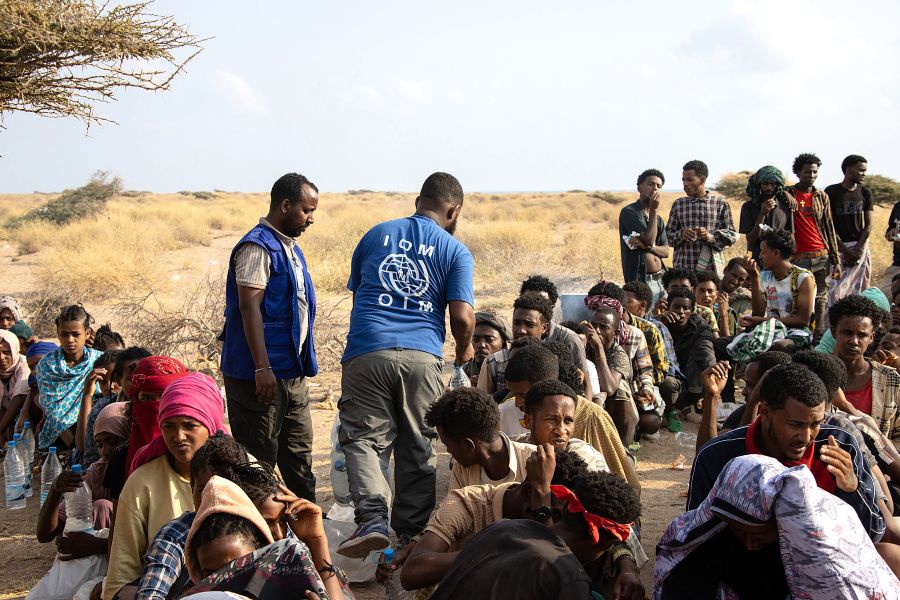
Djibouti occupies a strategic position along the Eastern Route, serving as a key transit point for migrants seeking opportunities in the Gulf.
Migration flows through Djibouti are rising sharply, driven by regional conflict, economic pressures, and increasingly organized smuggling networks along the Eastern Route linking the Horn of Africa to the Arabian Peninsula.
In 2025, more than 522,000 migration movements have been recorded in Djibouti, marking a 20 per cent increase compared to 2024. This follows an earlier surge, when movements in 2024 rose 56 per cent compared to the previous year.
Returns from the Arabian Peninsula are also rising. The number of migrants returning has increased by 29 per cent, reflecting the continued vulnerability of migrants attempting the journey through Yemen toward Gulf countries.
Migration along the Eastern Route remains extremely dangerous. In 2025 alone, at least 140 migrants have died and 33 others have been reported missing along migration routes in Djibouti.
Migrants often travel long distances through remote and harsh terrain, facing hunger, dehydration, illness, and violence. Limited monitoring and insecurity along parts of the route further heighten the risks faced by migrants.
Many migrants travelling through Djibouti originate from Ethiopia, where conflict, economic hardship, and limited livelihood opportunities continue to push people to migrate.
While many attempt the dangerous sea crossing to Yemen in hopes of reaching Gulf countries, others move in the opposite direction following deportation or failed migration attempts.
Increasingly organized smuggling networks operating across Ethiopia, Djibouti, and Yemen facilitate movement along the route toward Saudi Arabia.
Migrants travelling along this route are frequently exposed to violence, exploitation, extortion, and life-threatening conditions at the hands of smugglers.
The increase in migration movements is placing additional pressure on humanitarian systems while exposing migrants to severe risks along the route.
Many migrants arrive exhausted, injured, or severely dehydrated after travelling for days or weeks in harsh conditions. Women, unaccompanied children, and pregnant women are among the most vulnerable groups.
Migrants often lack access to food, shelter, healthcare, and protection services. Returnees arriving from Yemen are particularly vulnerable, often reaching Djibouti without resources, documentation, or support networks.
The International Organization for Migration (IOM) provides life-saving assistance to migrants travelling through Djibouti, including in remote areas along migration routes.
Support includes shelter, food, healthcare, water, and psychosocial services. IOM also works with the Government of Djibouti and humanitarian partners to monitor migration trends, strengthen protection systems, and support migrants returning from the Arabian Peninsula.
Efforts also include supporting communities along migration routes to strengthen resilience and maintain social cohesion.
Addressing risks along the Eastern Route requires a coordinated, whole-of-route approach, sustained humanitarian support and stronger efforts to expand safe and regular migration pathways.
Greater investment is needed to protect migrants along the route, strengthen humanitarian assistance, and support communities hosting migrants.
Well-managed labour migration can also contribute to reducing youth unemployment and supporting economic development by better aligning national skills with international labour market needs.
Credit: IOM News