
Global cholera vaccine supply has now increased to a level sufficient to allow the resumption of life-saving preventive campaigns for the first time in over three years, Gavi, the Vaccine Alliance, UNICEF, and the World Health Organization (WHO) announced today.
Mozambique is the first country to restart preventive vaccination, following the halt in 2022 caused by the global surge in cholera cases that drove up demand and led to shortages of oral cholera vaccine (OCV) stocks.
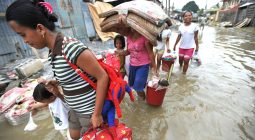
The preventive vaccination campaign begins amid an ongoing cholera outbreak and the aftermath of floods that affected more than 700 000 people and displaced many. The floods disrupted health systems and damaged water systems, further increasing the risk of waterborne diseases such as cholera.
“Global vaccine shortages forced us into a cycle of reacting to cholera outbreaks instead of preventing them. We are now in a stronger position to break that cycle. I thank EUBiologics, currently the only manufacturer producing cholera vaccines at the scale needed for mass vaccination campaigns, for its efforts, and urge others to enter this vital space. These vaccines will save lives,” said Dr Tedros Adhanom Ghebreyesus, WHO Director-General.
A first allocation of 20 million doses is being deployed for preventive campaigns. Of these, 3.6 million doses were delivered to Mozambique; 6.1 million to the Democratic Republic of the Congo that is also experiencing significant outbreaks; and 10.3 million doses are planned for delivery to Bangladesh.
Following sustained efforts by global agencies, manufacturers and partners, annual global supply of OCV has doubled from 35 million doses in 2022 to nearly 70 million doses in 2025. The doses are being financed by Gavi, and procured and delivered to countries by UNICEF.
The three countries were chosen based on allocation criteria set out by the Global Task Force for Cholera Control (GTFCC), a partnership of over 50 organizations, to ensure cholera vaccines for preventive campaigns are distributed systematically, equitably and transparently.
The restoration of preventive vaccination has been made possible by years of sustained efforts and close collaboration among agencies, manufacturers, and other partners to meet the continued high demand to respond to outbreaks, expand production capacity and streamline allocation, ensuring that limited supplies reach the places where the risk and public health impact are greatest.
The OCV is safe and effective and is recommended for individuals over 1 year of age. One dose of OCV provides short-term protection for at least 6 months and can help bring outbreaks under control, while two doses provide protection against infection for longer – 3 years.
While global vaccine supply steadily improves, the one-dose strategy will remain the standard for outbreak responses, with the use of two doses considered on a case-by-case basis.
Cholera spreads through contaminated food and water, causing severe diarrhoea and dehydration. It can lead to death if it is not treated quickly. It is found in places without safe water and sanitation, mainly in localities affected by conflict and poverty.
More than 600 000 cases of cholera or acute watery diarrhoea and nearly 7600 deaths were reported to WHO from 33 countries last year, although these are underestimates as cholera remains underreported. Since 2021, global cholera cases have risen year after year, with a decline observed in 2025. Cholera deaths, however, have continued to increase over the same period.
Vaccination is only one aspect of cholera prevention and response. Long-term investments in safe water, sanitation and hygiene infrastructure, alongside disease surveillance, rapid treatment and community engagement, remain essential to prevent outbreaks from starting and spreading, and to reduce deaths in the long term.
Gavi, the Vaccine Alliance is a public-private partnership that helps vaccinate more than half the world’s children against some of the world’s deadliest diseases.
Since its inception in 2000, Gavi has helped to immunise a whole generation – over 1.2 billion children – and prevented more than 20.6 million future deaths, helping to halve child mortality in 78 lower‑income countries.
UNICEF, the United Nations agency for children, works to protect the rights of every child, everywhere, especially the most disadvantaged children and in the toughest places to reach.
Dedicated to the well-being of all people and guided by science, the World Health Organization leads and champions global efforts to give everyone, everywhere an equal chance at a safe and healthy life.